In-Ground Trampoline Sizes: Finding the Right Fit for Your Yard and Family
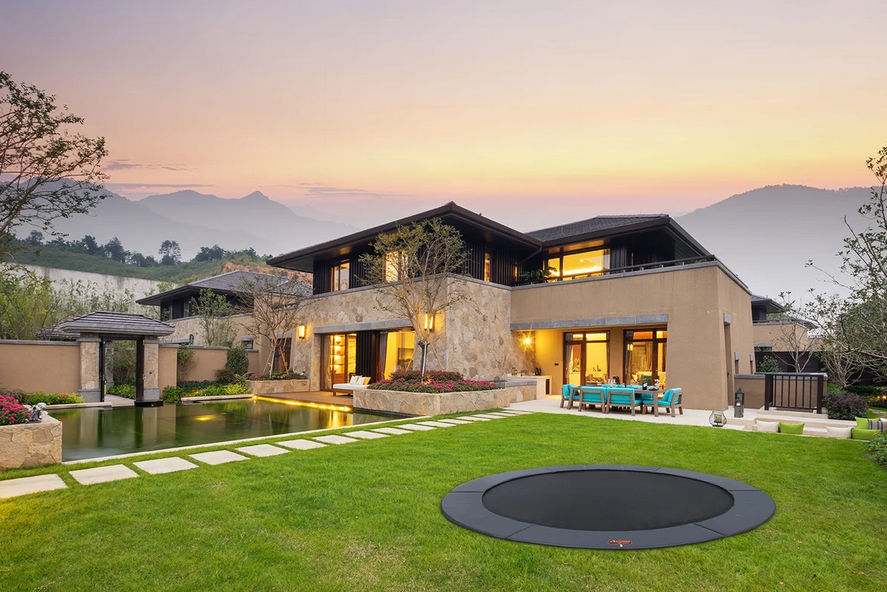
Selecting the correct in-ground trampoline size for your family involves balancing space requirements, family needs, and yard dimensions. Families with three children need adequate jumping surface to accommodate multiple users safely. Too small a trampoline creates safety hazards and limits enjoyment. Too large a trampoline may overwhelm available yard space. Understanding trampoline sizing, yard requirements, and family considerations helps ensure you purchase the ideal model for your household.
Common In-Ground Trampoline Sizes
In-ground trampolines come in standardized sizes measured in feet across the diameter or length. The most common sizes range from 8 feet to 16 feet in diameter. Each size category serves different purposes and space requirements.
Eight-foot trampolines represent the smallest practical option for families. These compact models fit tight spaces and suit younger children or individual users. However, eight-foot models become crowded quickly when multiple children jump simultaneously. Safety concerns arise when more than one child uses small trampolines at the same time.
Ten-foot trampolines offer moderate size suitable for small yards and smaller families. This size accommodates two children comfortably but becomes cramped with three or more simultaneous users. Ten-foot models work well for families with older children who take turns or younger children who weigh less.
Twelve-foot trampolines represent popular mid-range options balancing space and family usage. This size accommodates multiple simultaneous users without excessive crowding. Three children can use a twelve-foot trampoline together safely. This size works well for many suburban yards offering adequate space.
Fourteen-foot and sixteen-foot trampolines provide maximum bounce surface area. These larger models allow multiple children to jump simultaneously without safety concerns. Larger trampolines distribute weight better and provide more consistent bounce characteristics. However, these sizes require substantial yard space.
Rectangular trampolines offer alternative sizing. Rather than circular designs, rectangular models measure by length and width, typically ranging from 8 by 12 feet to 10 by 17 feet. Rectangular designs provide more usable jumping surface than circular models of equivalent diameter.
Calculating Space Requirements
Beyond trampoline dimensions, adequate clearance space must surround the entire unit. Safety experts recommend minimum clearance of 6 to 8 feet on all sides of in-ground trampolines. This clearance prevents users from bouncing into fences, trees, structures, or obstacles.
A twelve-foot diameter trampoline requires approximately a 24 to 32-foot diameter circular space when including safety clearance. Rectangular trampolines require rectangular clearance areas extending several feet beyond the trampoline on all sides.
Measuring your yard carefully before purchasing ensures adequate space. Mark the trampoline location and clearance perimeter with chalk or string to visualize the final installation. This process reveals whether your yard can safely accommodate your preferred trampoline size.
Consider future yard plans when assessing space. Growing trees may eventually encroach on clearance zones. Planned landscape additions might reduce available space. Selecting slightly smaller trampolines than maximum possible size accommodates future yard changes.
Family Size Considerations
Families with three children require trampolines accommodating multiple simultaneous users. Child ages and weights influence sizing decisions. Younger children weigh less and require less surface area per person. Teenagers weigh more and benefit from larger trampolines distributing weight across wider surfaces.
If your three children are significantly different ages, a larger trampoline provides flexibility. Toddlers and teenagers can use the same trampoline safely when adequate surface area exists. Smaller trampolines force age-separated jumping schedules limiting enjoyment.
Read More: Protecting Your Home From Moisture Damage Through Prompt Slab Leak Repair
Consider whether children typically bounce together or take turns. Families where children jump simultaneously need larger trampolines than families where children use the trampoline sequentially. Three children playing together comfortably requires minimum twelve-foot diameter models.
Weight capacity ratings should exceed your family’s combined weight significantly. Most quality trampolines carry maximum weight specifications. If your family’s combined weight approaches the maximum, consider larger models with higher weight capacities. Trampolines operating at maximum capacity fail prematurely.
Safety and Enjoyment Factors
Larger trampolines provide superior safety characteristics. More bounce surface area means users have less chance of bouncing toward edges or obstacles. Weight distributes across larger surfaces preventing excessive stress on springs and frames.
Bounce quality improves with larger trampolines. Smaller trampolines provide limited jumping area requiring frequent edge bounces. Larger models allow sustained bouncing in varied locations. Consistent quality bounce encourages longer play sessions and better physical activity.
User satisfaction increases with appropriately sized trampolines. Cramped trampolines frustrate children and limit enjoyment. Adequate-sized models allow comfortable play for multiple children simultaneously.
Recommendations for Three-Child Families
For most families with three children, twelve-foot diameter in-ground trampolines represent the optimal balance of size, safety, and yard requirements. This size accommodates three children bouncing simultaneously without overcrowding. Weight distribution remains safe and bounce quality remains consistent.
Families with older teenagers or combined family weights exceeding 400 pounds should consider fourteen-foot or sixteen-foot models. Larger sizes provide better safety margins and weight distribution for heavier users.
Families with limited yard space but committed to in-ground trampolines should select ten-foot models accepting that all three children cannot jump simultaneously. Establishing turn-taking schedules ensures each child receives adequate use time.
Families with generous yard space might select sixteen-foot models allowing multiple children to play with friends. Larger trampolines provide investment value through extended usable lifetime and increased usage opportunities.
Installation Space Verification
Before purchasing, verify that your selected size fits your yard including clearance requirements. Contact installation companies for site assessments. Professional installers evaluate yard conditions, drainage, and space adequacy. Many provide recommendations for optimal trampoline sizing based on your specific property.
Confirm that delivery access exists for installation. Large trampolines require delivery trucks accessing your yard. Narrow gates, low overhead clearance, or difficult property access may limit installation of larger models.
Conclusion
Selecting appropriate in-ground trampoline size for families with three children involves careful consideration of yard dimensions, safety requirements, and usage patterns. Twelve-foot diameter trampolines generally suit most three-child families offering adequate bounce surface, good weight distribution, and reasonable yard space requirements. Measuring available space carefully and assessing your family’s combined weight ensures you select trampolines providing years of safe enjoyment for your entire family.