What Affordable Custom Homes and Reliable Jobsites Have in Common: The People and Equipment Behind the Build
Every beautiful custom home tells two stories. The one the homeowner sees is about design: the open kitchen, the vaulted ceilings, the finishes chosen room by room. The one the industry sees is about execution: crews, schedules, materials, and machines working in sequence for months. When a custom home comes in on budget and on time, it’s because both stories were managed well. That’s why the two most underrated decisions in residential construction are choosing the right custom home builder and, further down the chain, choosing the right construction equipment supplier. One shapes the project you experience; the other shapes the jobsite you never see.
What Makes a Custom Home Builder Worth Hiring
An affordable custom home is not a cheap home. It’s a home where every dollar was spent deliberately. Experienced custom home builders create that outcome long before ground breaks, through transparent pricing, realistic allowances, and a design process that matches the plan to the budget instead of discovering the gap at framing stage.
When evaluating builders, a few signals separate professionals from gamblers. Look for a portfolio of completed homes in your price range, not just showpieces. Ask how change orders are priced and documented, because that’s where affordable projects quietly become expensive ones. Check how long their core subcontractors have worked with them; a builder who keeps the same foundation, framing, and finish crews for years delivers more consistent quality than one assembling strangers for each job. And ask about schedule history. A builder who finishes when promised is usually a builder who manages every layer beneath them well.
Read More: Denver Concrete Contractors: Building Strong Foundations for Your Projects
That last point matters more than most homeowners realize. A custom home passes through excavation, concrete, framing, mechanical rough-ins, insulation, drywall, stucco or siding, flooring, and finish work. Each phase depends on specialized crews, and each of those crews depends on equipment showing up in working order.
The Hidden Layer: Where Contractors Get Their Equipment
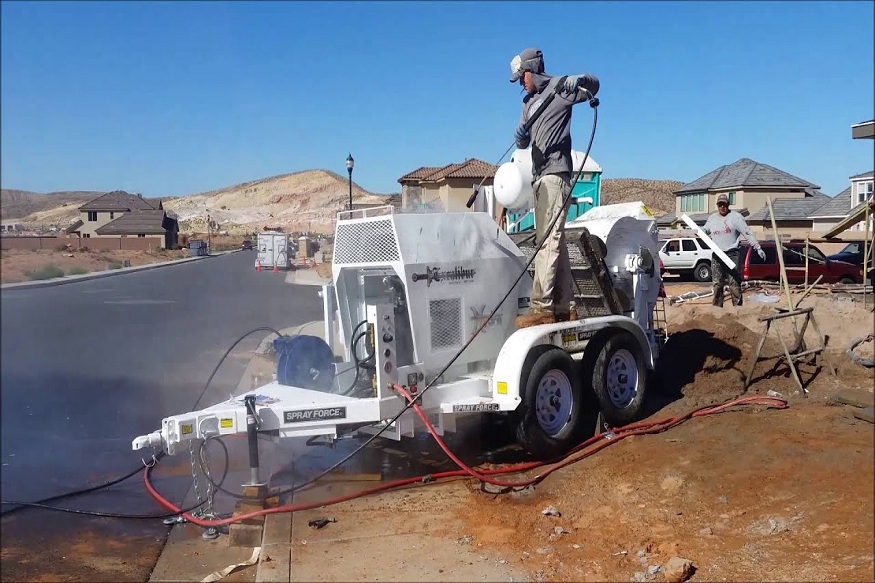
Here is the part of homebuilding no one puts in the brochure. The stucco on the exterior went through a pump. The self-leveling underlayment beneath the hardwood was mixed and placed with purpose-built machines. The insulation in the walls came out of blowing equipment. The fireproofing, the concrete work, the textured ceilings: all of it moved through hoses, nozzles, mixers, and pumps that wear out under exactly the abrasive materials they’re built to move.
Behind those crews stands a construction equipment supplier, and the specialty ones function less like stores and more like partners. A good specialty distributor stocks the trade-specific machines a general dealer never carries, along with the wear parts that keep them alive: nozzle liners, rotors and stator tubes, seals, fittings, and material hoses. Just as important, they answer the phone with real technical knowledge, because the person calling is usually standing next to a stalled machine with a crew on the clock.
Why Homeowners Should Care About Equipment Uptime
Downtime rolls uphill. When a plaster pump dies mid-application or a texture rig won’t hold pressure, the subcontractor loses a day, the builder’s schedule slips, trades stack up behind the delay, and the homeowner eventually pays for it in time, and sometimes in money. Contractors who work with suppliers offering same-day parts, equipment service, rentals for peak demand, and financing for major purchases simply miss fewer days. Builders who hire those contractors finish homes closer to the promised date and price.
This is also a quiet quality issue. Worn spray equipment produces inconsistent stucco texture. A failing pump can compromise a concrete or plaster application in ways that only show up later. Well-maintained machines, backed by a supplier with deep parts inventory, produce the crisp, uniform finishes that make a custom home look custom.
Read More: How to choose a general contractor for a commercial construction project?
One Standard, Top to Bottom
The lesson for anyone planning a build is that excellence in construction is a supply chain, not a single decision. Vet your custom home builder on transparency, track record, and trade relationships. Understand that the best builders, in turn, work with subcontractors who take their equipment seriously and source it from specialty suppliers who keep jobsites running. When every layer of that chain holds the same standard, the result is the home you actually wanted: built well, finished beautifully, and delivered without the drama.